 info@mplogistics.vn
 (+84) 28 3811 9033


In January 2026, Vietnam’s seafood exports recorded significant growth, reaching approximately US$874 million, a 13% increase compared to the same period last year. This strong performance signals a positive start to the year, with export activities maintaining relatively stable order volumes.
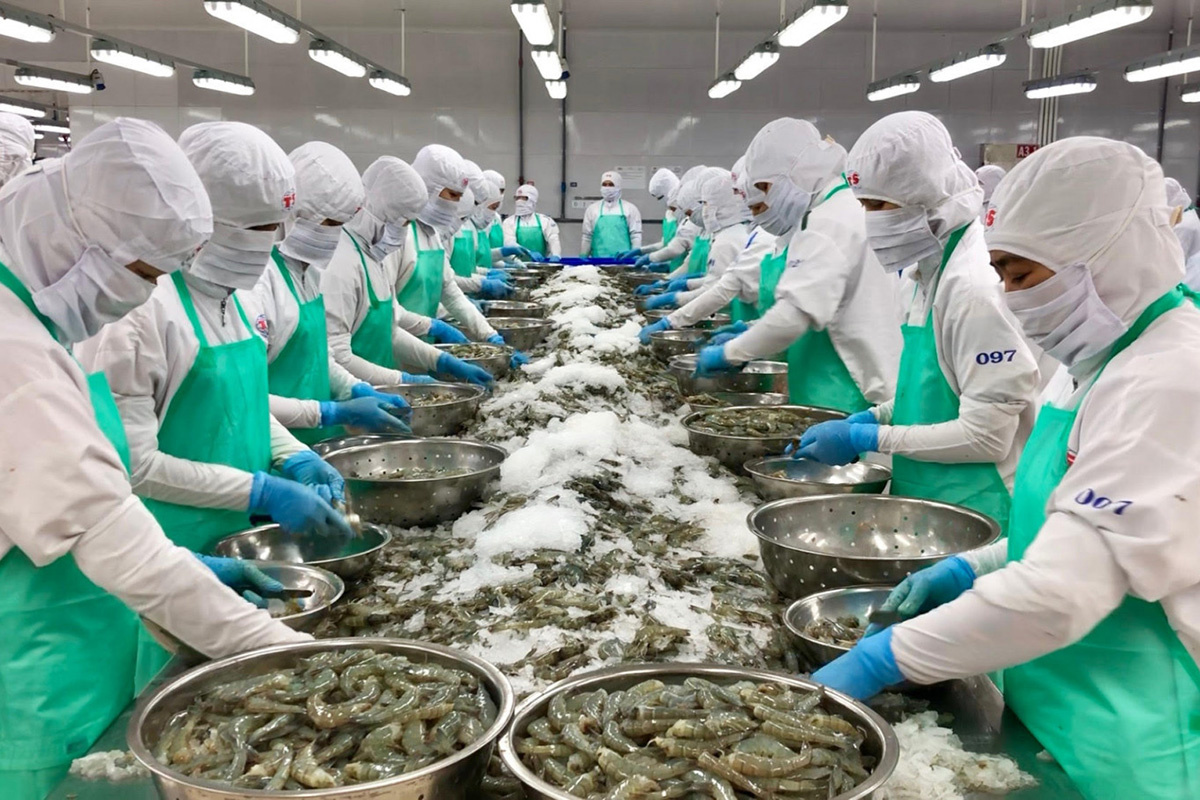
According to figures released by the Vietnam Association of Seafood Processing and Export (VASEP), the results reflect sustained efforts by seafood exporters despite ongoing pressure from technical barriers and tariffs in several key global markets.
Asia Drives Growth in Vietnam Seafood Exports
One of the main contributing factors to this result is the Asian market, with China and Hong Kong continuing to be key destinations for Vietnamese seafood, achieving an export value of nearly US$250 million, a 28.7% increase compared to the same period last year. This strong growth is mainly due to high demand for products such as shrimp for the Lunar New Year. Besides that, Japan is also a stable market with export value reaching nearly US$146 million, a 21.3% increase, with key products such as processed shrimp, frozen basa fish fillets, and squid/octopus. The ASEAN and South Korean markets also recorded impressive growth, reflecting the increasing trend of intra-regional trade and strong consumer demand.

Furthermore, exports to the ASEAN region reached approximately US$69 million, an increase of over 32%, while exports to South Korea exceeded US$67 million, a 9.1% increase. These figures highlight the growing opportunities for market expansion within the bloc and across Asia, especially as many countries in the region are recovering rapidly from the pandemic.
Challenges from Western Markets and Technical Barriers
However, the picture for seafood exports is not entirely positive. Several Western markets, such as the European Union (EU) and the United States, witnessed a decline in the value of seafood imports from Vietnam in January 2026. Exports to the EU reached nearly US$72 million, down 6.3%, while exports to the US only reached approximately US$96 million, down nearly 10% compared to the same period last year. This decline is attributed to weaker consumer demand and inventory carried over from the end of the previous year, as well as technical barriers and stringent import procedures in these markets.
Particularly for the US market, certification requirements and environmental protection standards, such as the Marine Mammal Protection Regulation (MMPA) and the implementation of Circular 74/2025 on the issuance of Certificates of Eligibility (COA), have created significant obstacles to the export of seafood products such as tuna and other product groups. This has made exporting to this market difficult since the beginning of the year.
However, in the long term, the trend of market diversification, expansion into new regions, and improving the quality of export products will be key to maintaining the growth momentum of the seafood industry. Businesses are also leveraging free trade agreements (FTAs) to access potential markets and enhance competitiveness with higher value-added products.

With a 13% increase recorded in the first month of the year, seafood exports are laying a positive foundation for growth throughout 2026. Although still facing challenges from major markets such as the EU and the US, signals from Asian markets, particularly China, Japan, and ASEAN, indicate that breakthrough opportunities remain wide open. To maintain this growth momentum, the Vietnamese seafood industry needs to focus on improving product quality, strictly adhering to international standards, and expanding and diversifying export markets.






 VN
VN