 info@mplogistics.vn
 (+84) 28 3811 9033


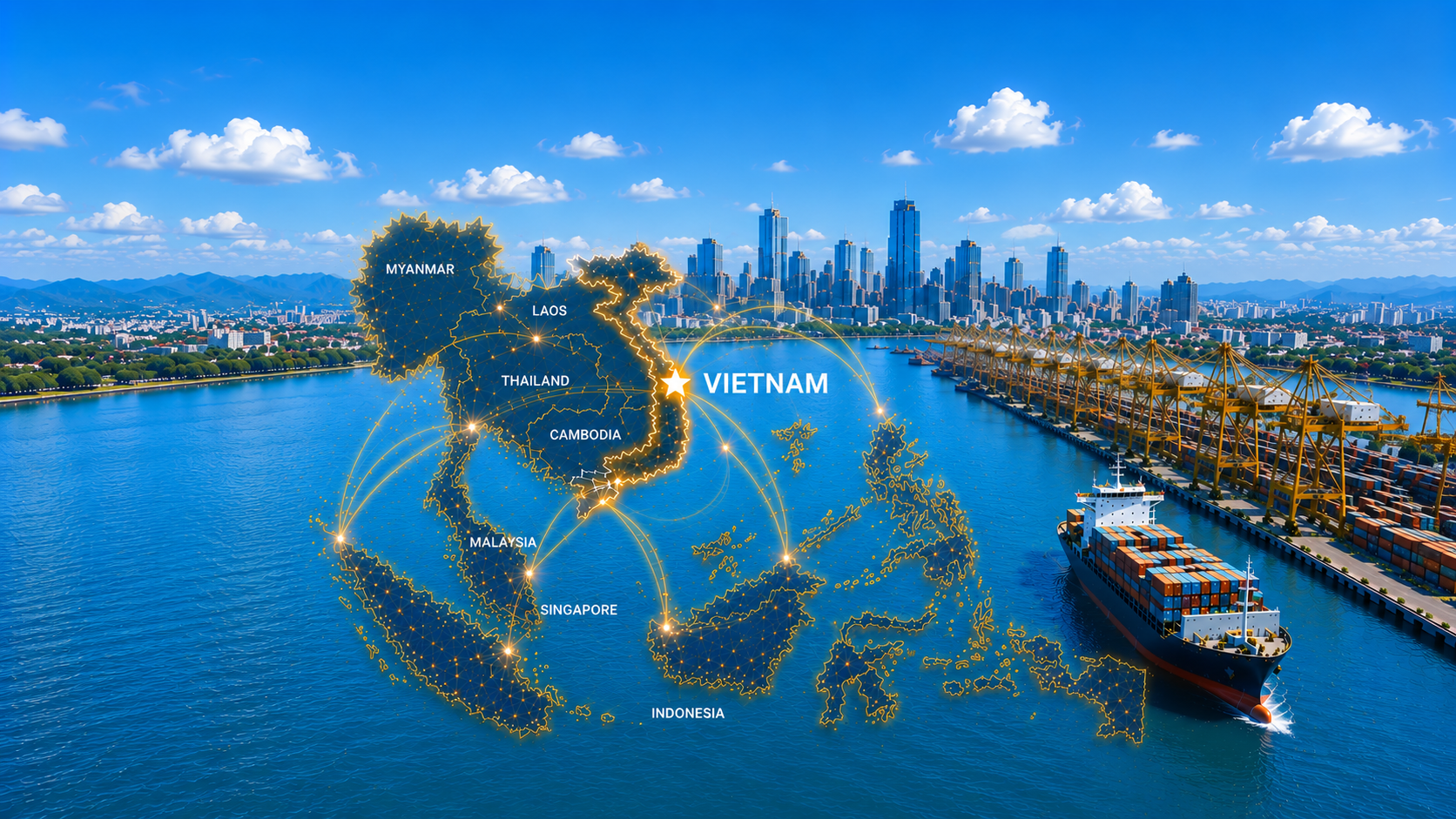
Vietnam – ASEAN Trade has surpassed 90 billion USD after more than 30 years of Vietnam joining ASEAN, reinforcing the bloc’s growing importance in Vietnam’s economic integration and development strategy.
1. ASEAN Emerges as a Key Production Connectivity Hub
Beyond being a promising export market, ASEAN also plays a major role as a supplier of raw materials, electronic components, machinery, and intermediate goods that support Vietnam’s domestic manufacturing sector.
In Vietnam’s import structure from ASEAN, products such as computers, electronic components, machinery, industrial spare parts, and petroleum products continue to account for a significant share.
Although Vietnam still maintains a trade deficit with ASEAN, experts believe this reflects the country’s strong demand for production inputs serving exports and domestic consumption.
Notably, Vietnam’s export structure to ASEAN has also undergone a clear transformation. While exports previously focused mainly on raw materials and agricultural products, the share of technology products, electronics, machinery, and higher value added goods has continued to increase.
2. Strong Potential for Cooperation Amid Supply Chain Restructuring
As the global economy continues to face uncertainties, ASEAN is emerging as a dynamic manufacturing and consumer hub with a population of more than 670 million people. This is considered an important foundation for Vietnam – ASEAN Trade to maintain strong growth momentum.
Experts believe Vietnam has several advantages to expand its role in regional supply chains, thanks to its strategic geographic location, improving manufacturing capabilities, and extensive free trade agreement network.
According to the ASEAN Investment Report 2025, FDI inflows into the region reached approximately USD 226 billion in 2024, up 8% year on year. Vietnam continued to remain among the top investment destinations within ASEAN.
Currently, eight ASEAN countries have invested across all 18 economic sectors in Vietnam. Manufacturing and processing industries continue to lead in both capital scale and number of projects, reflecting the ongoing trend of production relocation and supply chain expansion within the region.
3. Strengthening Regional Connectivity and Competitiveness

Analysts believe the coming years will be a crucial period for Vietnam to better leverage ASEAN advantages to enhance competitiveness and expand export markets.
Optimizing tariff incentives from existing FTAs, improving logistics infrastructure, and accelerating digital transformation are expected to play key roles in this process.
At the same time, the growing need for greater supply chain resilience within the region is encouraging ASEAN economies to strengthen intra regional cooperation. This creates opportunities for Vietnamese businesses to participate more deeply in higher value sectors such as technology, green manufacturing, and renewable energy.
The continued growth of Vietnam – ASEAN Trade not only reflects strong economic momentum, but also demonstrates Vietnam’s deeper integration into regional and global value chains.
Source: Collected





 VN
VN