 info@mplogistics.vn
 (+84) 28 3811 9033


Vietnam continues to strengthen its commercial relationship with the United States, one of its most important export markets. According to Vietnam Customs data reported by the Government News portal, bilateral trade reached approximately USD 137.42 billion in the first eight months of 2026, increasing 23.4% year-on-year. Separately, US statistics indicated that Vietnam ranked as the United States’ fifth-largest trading partner by the end of July 2026.
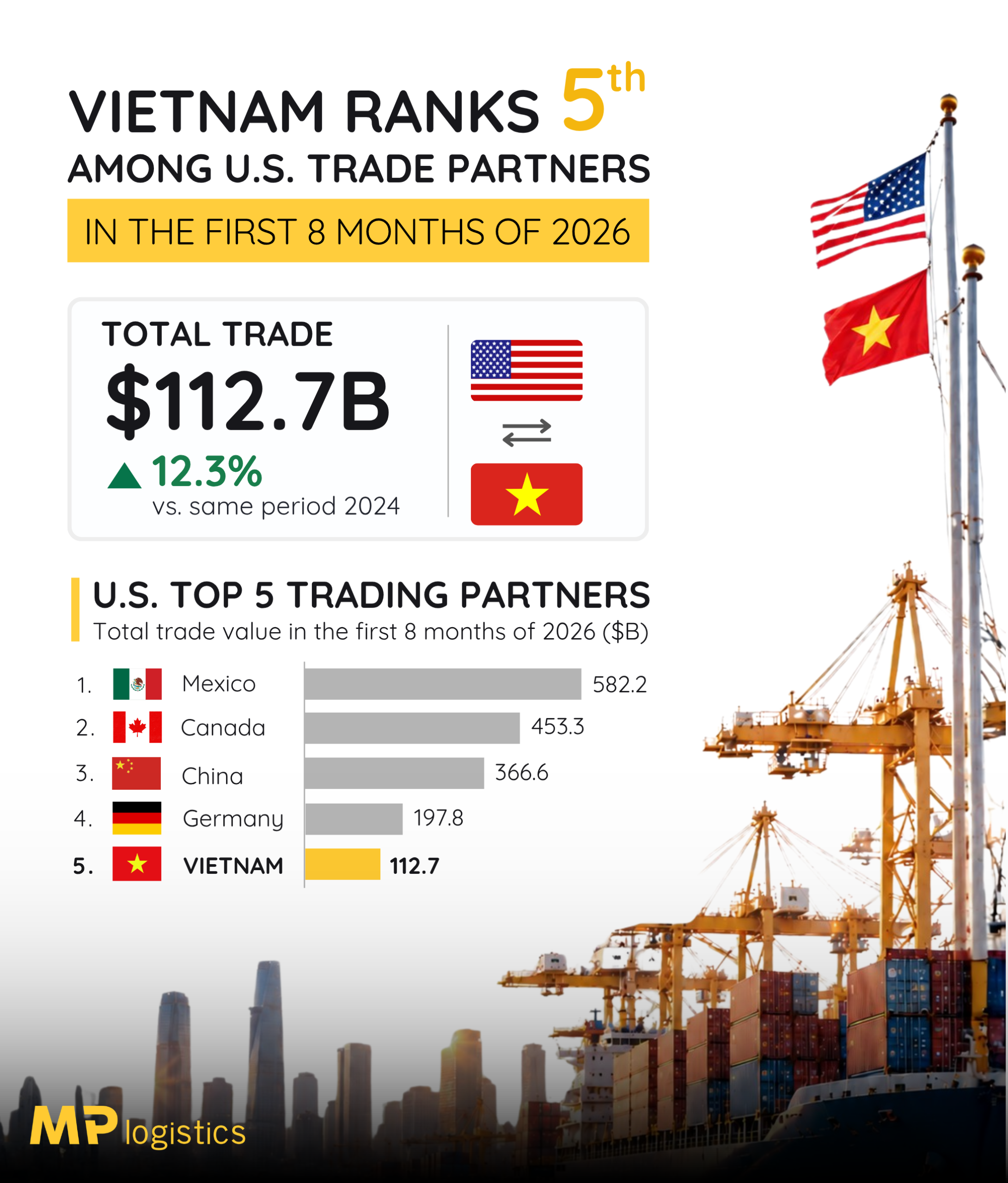
This development highlights the growing importance of Vietnam in international trade and reflects expanding connections between Vietnamese manufacturers, exporters, American importers, and global distribution networks.
As trade flows increase, businesses have more opportunities to reach international customers. At the same time, they need reliable transportation, efficient customs procedures, and well-coordinated supply chains to remain competitive in the US market.
What Is Driving Vietnam – US Trade Growth?

Several factors contribute to the continued development of bilateral trade between Vietnam and the United States.
1. Strong Demand for Vietnamese Exports
The United States remains Vietnam’s largest export market. Vietnamese products serve a broad range of industries, including electronics, machinery, textiles, footwear, furniture, and agricultural products.
Access to the US market allows Vietnamese businesses to expand their customer base and diversify sales opportunities. For exporters, meeting market requirements, maintaining product quality, and delivering shipments on schedule are essential to building long-term commercial relationships.
2. Expanding Manufacturing and Supply Chains
Vietnam’s manufacturing capabilities and international supplier networks have strengthened its role in global production. Companies operating in Vietnam participate in supply chains that connect raw material suppliers, factories, logistics providers, distributors, and retailers across multiple countries.
As these networks expand, effective coordination between production and transportation becomes increasingly important. Businesses must ensure that products move efficiently from manufacturing facilities to ports, distribution centers, and final destinations.
3. Growing Opportunities for International Businesses
The expansion of Vietnam–US trade creates opportunities for exporters, importers, freight forwarders, and supporting industries.
Vietnamese companies can explore new distribution channels, strengthen partnerships with US buyers, and improve their international market presence. However, successful expansion also requires an understanding of import regulations, product standards, documentation requirements, and changing trade conditions.
How Vietnam – US Trade Growth Creates Opportunities for Logistics
Growing bilateral trade increases the need for dependable logistics services that connect Vietnamese suppliers with American customers.
International Freight Transportation
Moving cargo between Vietnam and the United States requires careful planning across international transportation routes. Businesses must evaluate transit times, freight costs, cargo characteristics, and delivery requirements when selecting shipping solutions.
Air freight may suit urgent or time-sensitive shipments, while ocean freight can be appropriate for larger volumes and shipments with more flexible delivery schedules.
Choosing the right transportation option helps businesses balance cost efficiency with delivery reliability.
Customs Clearance and Trade Compliance
Cross-border shipments must comply with the applicable customs regulations and import requirements in both markets.
Accurate commercial invoices, packing lists, product classifications, and other required documentation help facilitate customs processing. Businesses should also verify product-specific requirements before shipping, particularly when dealing with regulated goods.
Early preparation and coordination with logistics partners can help reduce avoidable delays and additional costs.
Supply Chain Visibility and Delivery Coordination

International shipments involve multiple parties, including suppliers, carriers, customs brokers, importers, and distribution partners.
Clear communication and timely shipment updates help businesses manage inventory, coordinate delivery schedules, and respond to unexpected disruptions. Better visibility across the supply chain also supports more informed operational decisions.
Logistics Cost Optimization
Transportation and handling expenses can significantly affect export profitability. Businesses should regularly review freight options, shipment consolidation opportunities, packaging efficiency, and inventory planning.
A well-structured logistics strategy can help reduce unnecessary costs while maintaining the service levels required by international customers.
Challenges Businesses Should Consider When Entering the US Market
Although the US market offers considerable opportunities, exporters should prepare for several operational challenges.
- Regulatory requirements: Products may be subject to specific US import rules, safety standards, labeling requirements, or other compliance obligations.
- Transportation uncertainty: Port congestion, capacity constraints, and changes in shipping conditions can affect delivery schedules.
- Cost fluctuations: Freight rates, fuel expenses, and other logistics costs may change over time.
- Intense market competition: Exporters must maintain competitive pricing, product quality, and reliable delivery performance.
- Changing trade policies: Tariffs and trade regulations can affect product costs and market access, making it important to monitor official updates.
Preparation, accurate documentation, and coordination with experienced service providers can help businesses manage these challenges more effectively.

Vietnam’s expanding trade relationship with the United States creates new opportunities for exporters, manufacturers, and businesses participating in global supply chains. With bilateral trade reaching significant levels in 2026, the US market remains an important destination for Vietnamese goods and a key driver of international commercial activity.
To capitalize on these opportunities, businesses need to strengthen export capabilities, optimize transportation costs, ensure customs compliance, and improve supply chain coordination. Reliable logistics planning and adaptability to changing market conditions will remain essential to sustaining growth and strengthening Vietnam’s position in international trade.




 VN