 info@mplogistics.vn
 (+84) 28 3811 9033


In the first nine months of 2026, Ho Chi Minh City recorded a remarkable performance in attracting foreign direct investment (FDI), with total registered capital reaching approximately USD 17.8 billion. This figure was 4.23 times higher than the same period last year and equivalent to 162.4% of the city’s full-year FDI target.
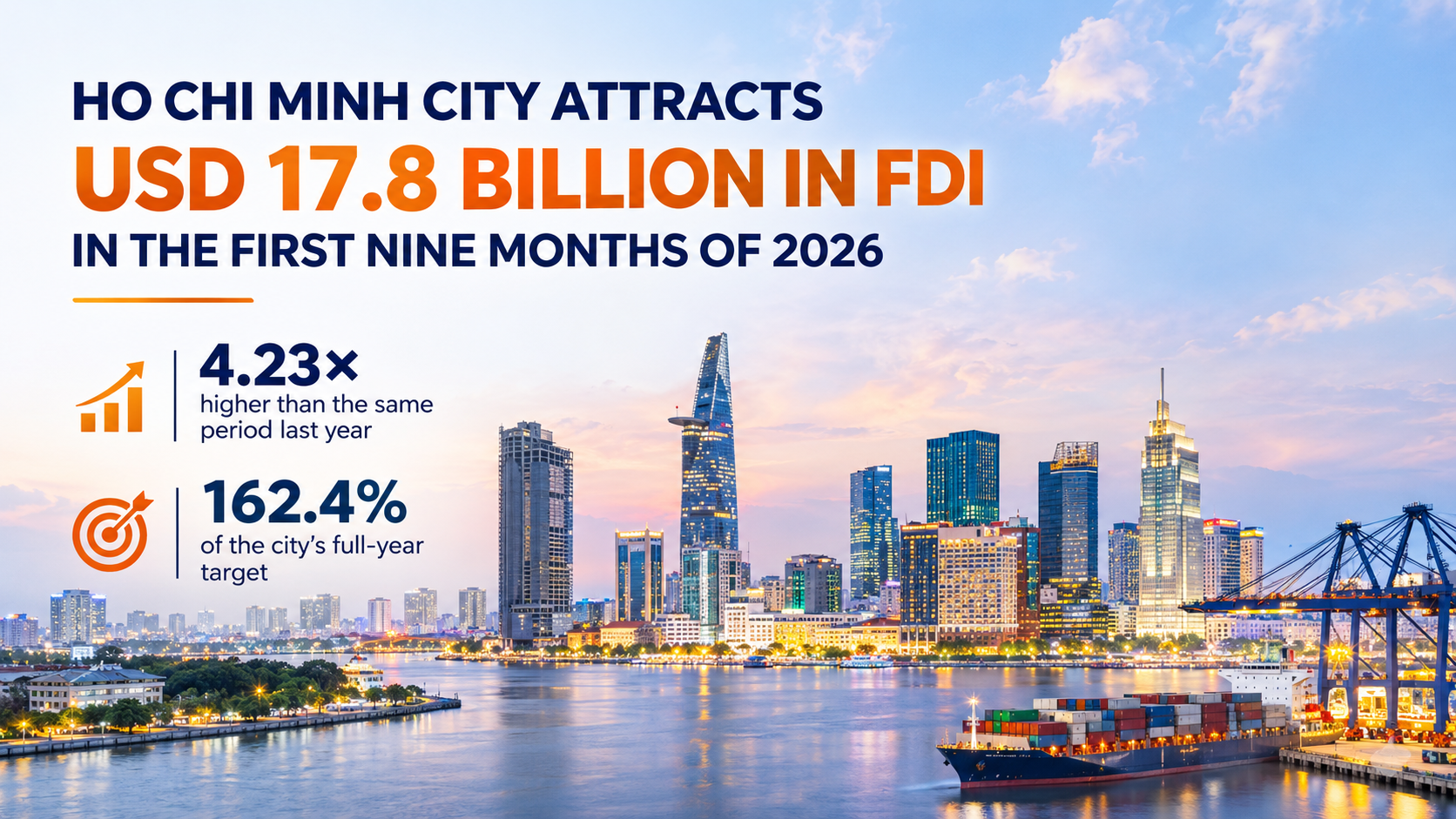
This strong performance highlights Ho Chi Minh City’s growing appeal to international investors and reflects its potential as a strategic destination for investment, manufacturing, trade, and global supply chain connectivity.
Exceeding its annual FDI target within the first nine months also provides fresh momentum for economic development, production expansion, and enhanced competitiveness.
For businesses, particularly those operating in manufacturing, trading, and import-export, rising FDI inflows create new opportunities for cooperation and business expansion.
Rising FDI Creates Opportunities
Foreign direct investment plays an important role in expanding production capacity, facilitating technology transfer, and strengthening connections between domestic businesses and international partners.
As foreign investors expand their presence in Ho Chi Minh City, demand for manufacturing facilities, business operations, and distribution networks is also expected to increase.
Key impacts of rising FDI on manufacturing and international trade include:
- Expanding Manufacturing Capacity: Investment capital enables businesses to develop production facilities, acquire machinery and equipment, and improve operational capabilities.
- Boosting Export Activities: Foreign-invested enterprises can leverage international networks and distribution systems to expand their market reach and export opportunities.
- Strengthening Supply Chain Connectivity: Increased investment encourages cooperation among FDI enterprises, domestic suppliers, manufacturers, and logistics service providers.
- Increasing Import Demand: The development and operation of manufacturing facilities may drive demand for imported machinery, equipment, raw materials, and components.
These developments strengthen the connection between foreign investment and international trade, creating additional opportunities for businesses in the logistics sector.
How FDI Growth Drives Logistics Demand in Ho Chi Minh City

Rising FDI inflows not only stimulate investment activities but also increase demand for freight transportation and cargo management throughout the supply chain.
As businesses expand their manufacturing operations, greater volumes of raw materials, machinery, equipment, and finished products need to be transported between suppliers, factories, warehouses, and end markets.
This creates growing demand for a wide range of logistics services, including:
- International Freight Forwarding: Supporting the transportation of raw materials, machinery, equipment, and finished goods through sea and air freight.
- Domestic Transportation: Connecting seaports, airports, industrial parks, factories, and warehouse facilities.
- Customs Clearance Services: Assisting businesses with import-export procedures, documentation preparation, and customs clearance requirements.
- Warehousing and Distribution: Meeting the demand for cargo storage, inventory management, and goods distribution throughout the supply chain.
- Integrated Logistics Solutions: Combining transportation, customs procedures, and cargo management to optimize operational time and costs.
For FDI enterprises engaged in export-oriented manufacturing, efficient supply chain management is particularly important for maintaining delivery schedules and strengthening competitiveness in international markets.
Ho Chi Minh City Strengthens Its Position as a Key Trade and Logistics Hub in Southern Vietnam
With its strategic economic position, Ho Chi Minh City plays an important role in connecting trade, manufacturing, and cargo flows between Southern Vietnam and international markets.
The city benefits from an extensive transportation network and major freight gateways, facilitating connections with manufacturing centers, industrial zones, and neighboring economic regions.
As FDI attraction continues to accelerate, demand for cargo connectivity between Ho Chi Minh City and other Southern provinces is also expected to create further growth opportunities.
For logistics businesses, this presents opportunities to develop multimodal transportation solutions, strengthen connectivity between seaports, airports, and industrial zones, and improve cargo flow management.
At the same time, increasing trade activities place greater demands on operational capacity, transparency in cargo management, and delivery reliability.
Investment in technology, transportation optimization, and service quality will therefore be essential for logistics providers seeking to capitalize on opportunities arising from rising FDI inflows.
What Should Businesses Prepare for Growing FDI Opportunities?
Rising foreign investment creates additional growth potential for manufacturing, trading, and logistics businesses. However, companies need to proactively develop appropriate operational and supply chain management strategies to maximize these opportunities.
Key priorities include:
- Proactive Import-Export Planning: Businesses should forecast demand for raw materials, machinery, equipment, and finished goods to establish suitable transportation plans.
- Logistics Cost Optimization: Selecting appropriate transportation methods, delivery schedules, and warehousing solutions helps businesses control operating expenses.
- Improving Customs Clearance Efficiency: Preparing complete documentation, verifying cargo information, and complying with import-export regulations can help minimize clearance delays.
- Choosing Professional Logistics Partners: Logistics providers with strong operational capabilities and transportation networks can help businesses manage cargo efficiently, from import procedures to distribution and export activities.
Preparing for these requirements will help businesses meet current operational demands while building a solid foundation for future expansion as investment and trade activities grow.
Ho Chi Minh City’s attraction of approximately USD 17.8 billion in registered FDI in the first nine months of 2026, 4.23 times higher than the same period last year and equivalent to 162.4% of its annual target, marks a positive development for the city’s investment environment and economic growth.
These investment inflows are expected to further support manufacturing, exports, and international trade connectivity while creating broader growth opportunities for the transportation and logistics sectors across Southern Vietnam.




 VN