 info@mplogistics.vn
 (+84) 28 3811 9033


Vietnam’s Ministry of Construction recently delivered a positive policy signal for Nam Do Son Port, strengthening momentum for this major logistics project in Hai Phong. Through Official Dispatch No. 15694/BXD-KHTC, the Ministry encouraged further research and alignment with national planning, showing clear institutional support.
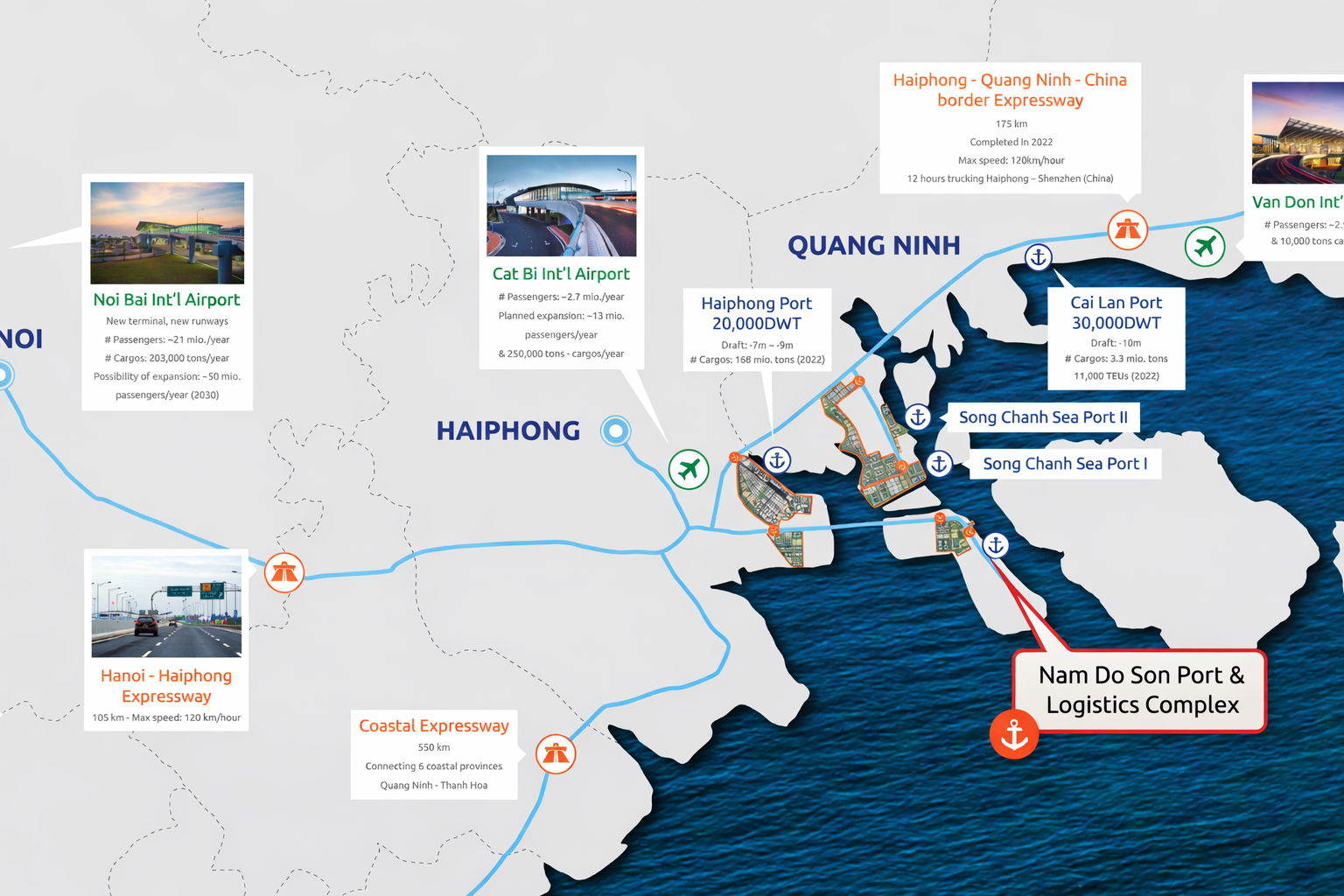
Vingroup proposed the project in Kien Hai Commune and Nam Do Son Ward, Hai Phong City. The location plays a vital role as a northern maritime gateway that links Vietnam to regional and global trade routes. The total planning area covers nearly 2,789 hectares, with more than 2,679 hectares reserved for port operations and integrated logistics zones.
Phased Development to Build Logistics Capacity
The project follows a two-phase roadmap to ensure steady growth and efficient investment.
Phase one (2026–2030) focuses on building two deep-water berths with a total length of about 900 meters. These berths can receive vessels of up to 200,000 DWT. Developers will also establish a 529-hectare logistics zone and nearly 4 kilometers of internal roads. This phase aims to launch initial cargo handling and logistics services by 2030.
Phase two (2031–2035) expands logistics capacity on a much larger scale. The plan adds nearly 1,970 hectares of logistics land and more than 8 kilometers of main transport corridors. This stage supports warehousing, distribution, and value-added services directly connected to port operations.
Impact on Logistics and Supply Chains
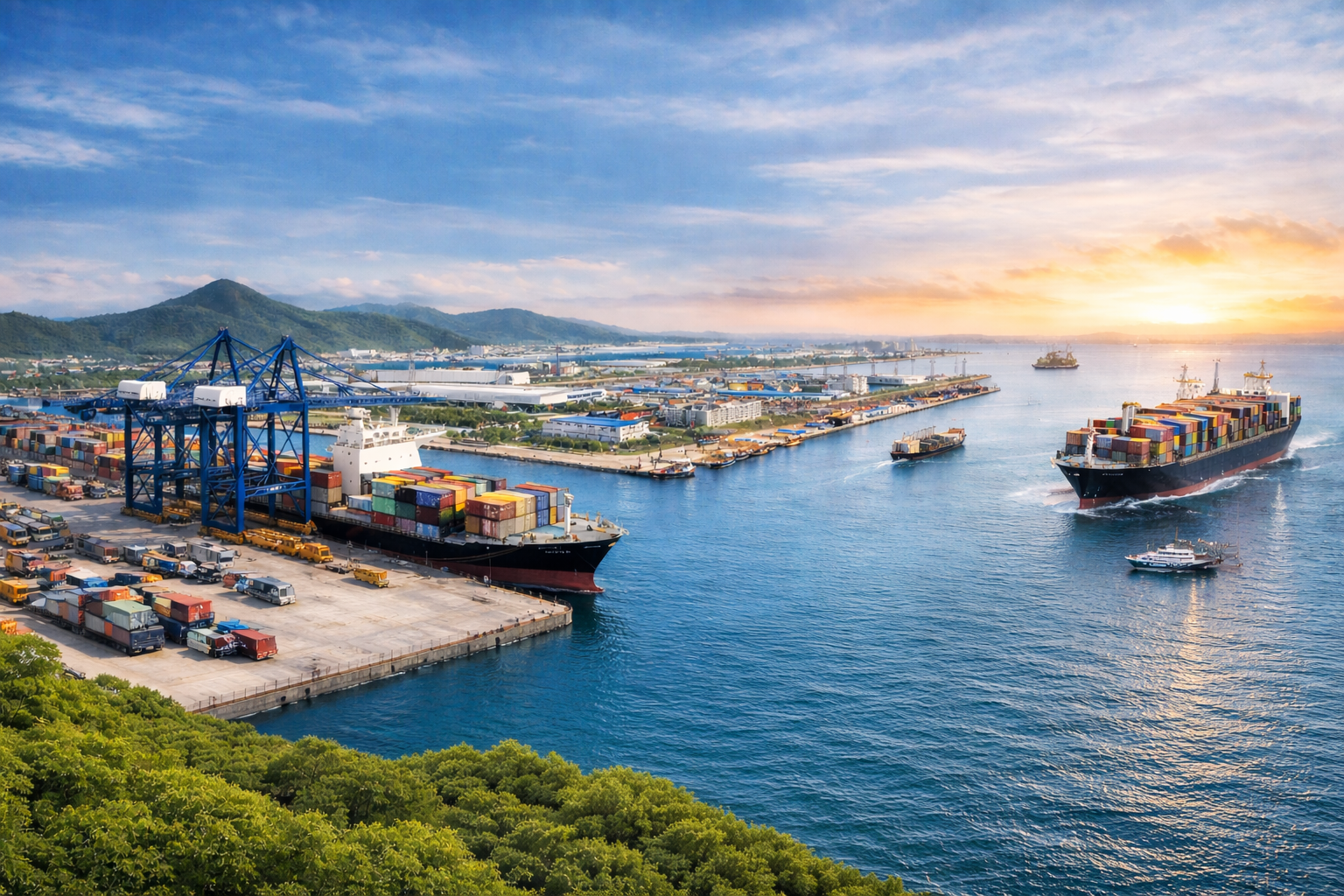
From a logistics standpoint, the project goes beyond adding port capacity. Its deep-water design allows large vessels to call directly at the port. As a result, Vietnam can reduce reliance on regional transshipment hubs and lower international shipping costs.
The close connection between the port and logistics zones also improves cargo flow. It shortens transfer times, strengthens intermodal links, and supports faster inland distribution. These advantages help businesses operate more efficiently across the supply chain.
Long-term strategic significance
Located along key coastal and cross-border economic corridors, the project is positioned to become an important node linking seaports, industrial zones, and regional distribution centers. If implemented effectively, it could attract logistics-driven foreign investment and support Vietnam’s ambition to move up global supply chains.
Overall, recent policy support reflects growing recognition of logistics infrastructure as a strategic pillar of economic development. Despite implementation challenges, the project has strong potential to reshape Northern Vietnam’s logistics landscape and enhance the country’s international trade competitiveness





 VN
VN