 info@mplogistics.vn
 (+84) 28 3811 9033


Vietnam’s import-export landscape has officially entered an unprecedented era of growth, shattering previous records with a staggering $110 billion trade turnover in July 2026 alone. This marks the second consecutive month where the circulation of goods surpassed the $100 billion threshold, firmly cementing Vietnam’s position among the top 15 largest global economies by trade volume.
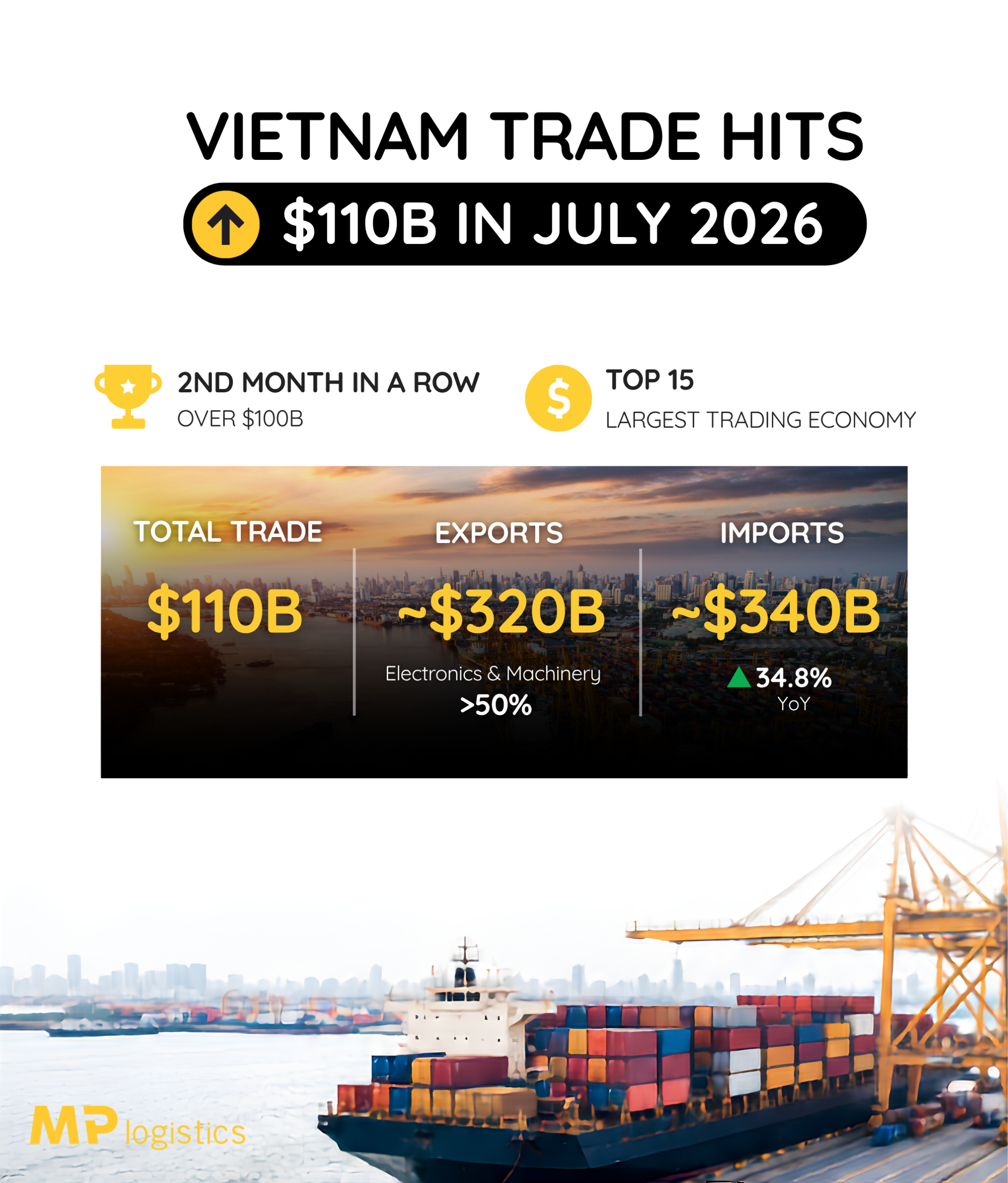
For manufacturers, factory operators, and logistics managers, this macroeconomic triumph translates directly into immediate operational pressure on the factory floor and at the ports, especially as the cumulative trade turnover for the year has surged to nearly $660 billion, representing a robust 28.1% year-over-year increase.
Dissecting the $660 Billion Milestone
The recent data reveals a heavily industrialized, export-driven momentum that is fundamentally reshaping regional commerce. Total exports reached nearly $320 billion, with the technology and industrial sectors acting as the undisputed engines of this growth; computers, electronics, and heavy machinery now account for more than 50% of the total export value.
Concurrently, imports climbed sharply by 34.8% to hit approximately $340 billion. This massive manufacturing expansion is further evidenced by the Purchasing Managers’ Index (PMI), which sits at a strong 52.9 points, clearly indicating a rapid influx of new orders, sustained industrial expansion, and exceptionally high factory output.
The Strategic Value of the Trade Deficit

While a $20 billion trade deficit might trigger alarm bells in some economies, it is a highly positive indicator within the context of Vietnam’s 2026 manufacturing boom. This deficit is not fueled by an influx of consumer luxury goods, but rather reflects a massive, urgent demand for raw materials, electronic components, and manufacturing equipment required to fulfill escalating export orders. When international orders accelerate at this pace, the greatest threat to a factory is not a lack of demand, but a severed supply chain.
Manufacturers are currently racing to import the necessary inputs to keep their assembly lines moving, making the optimization of logistics costs and the assurance of uninterrupted, fluid supply lines the absolute most critical factors for protecting profit margins.
Hidden Logistics Risks in a High-Volume Market
When import volumes spike dramatically, the pressure on customs clearance procedures and port infrastructure intensifies, causing shippers to frequently stumble over compliance and documentation hurdles. Under the pressure of rapid customs clearance, HS Code misclassification becomes incredibly common; a single misclassified component can trigger intense customs scrutiny and a red-channel inspection that halts an entire shipment.
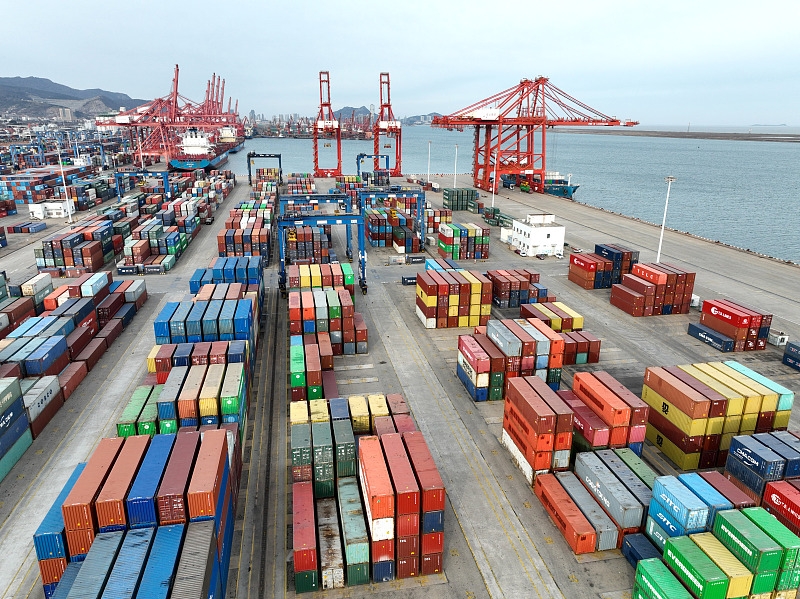
Furthermore, failing to secure the correct quarantine and specialized licenses for specific materials prior to arrival causes immediate paralysis at the port. This congestion at major port terminals means that any documentation delay translates directly into soaring Demurrage (DEM) and Detention (DET) charges.
Ultimately, the true cost of a port delay is not just the storage fee at the terminal, but the catastrophic financial impact of production line stoppages, where a stalled factory line is left waiting on a single delayed container of critical components.
Securing Your Supply Chain with APS

Behind the headline of a $110 billion month lies the grueling, detail-oriented reality of moving millions of containers through complex regulatory frameworks. APS is structured to absorb this operational friction, acting as the protective shield for your supply chain by leveraging deep expertise to proactively neutralize risks that threaten production timelines. APS specialists provide preemptive, legally sound expert customs consultation and compliance checks for intricate machinery and raw materials before the cargo even leaves the origin port.
Through rigorous documentation standardization, APS implements accelerated clearance protocols that significantly minimize the probability of red-channel routing. By offering an integrated logistics architecture that handles everything from optimizing ocean freight costs to executing precision Just-in-Time (JIT) final-mile delivery, APS manages the entire logistical lifecycle.
Vietnam’s record-breaking trade trajectory is a golden opportunity for manufacturers who can maintain their operational agility, so focus your internal resources on scaling production in 2026 and let industry experts manage the complexities of modern freight.
Source: VnEconomy
17/08/2026





 VN
VN