 info@mplogistics.vn
 (+84) 28 3811 9033


Vietnam has reached a historic milestone, with total merchandise trade surpassing US$1 trillion for the first time. According to the latest statistics, Vietnam’s total import-export turnover reached US$1,010.55 billion in the first 10 months of 2026, up 32.3% year-on-year.
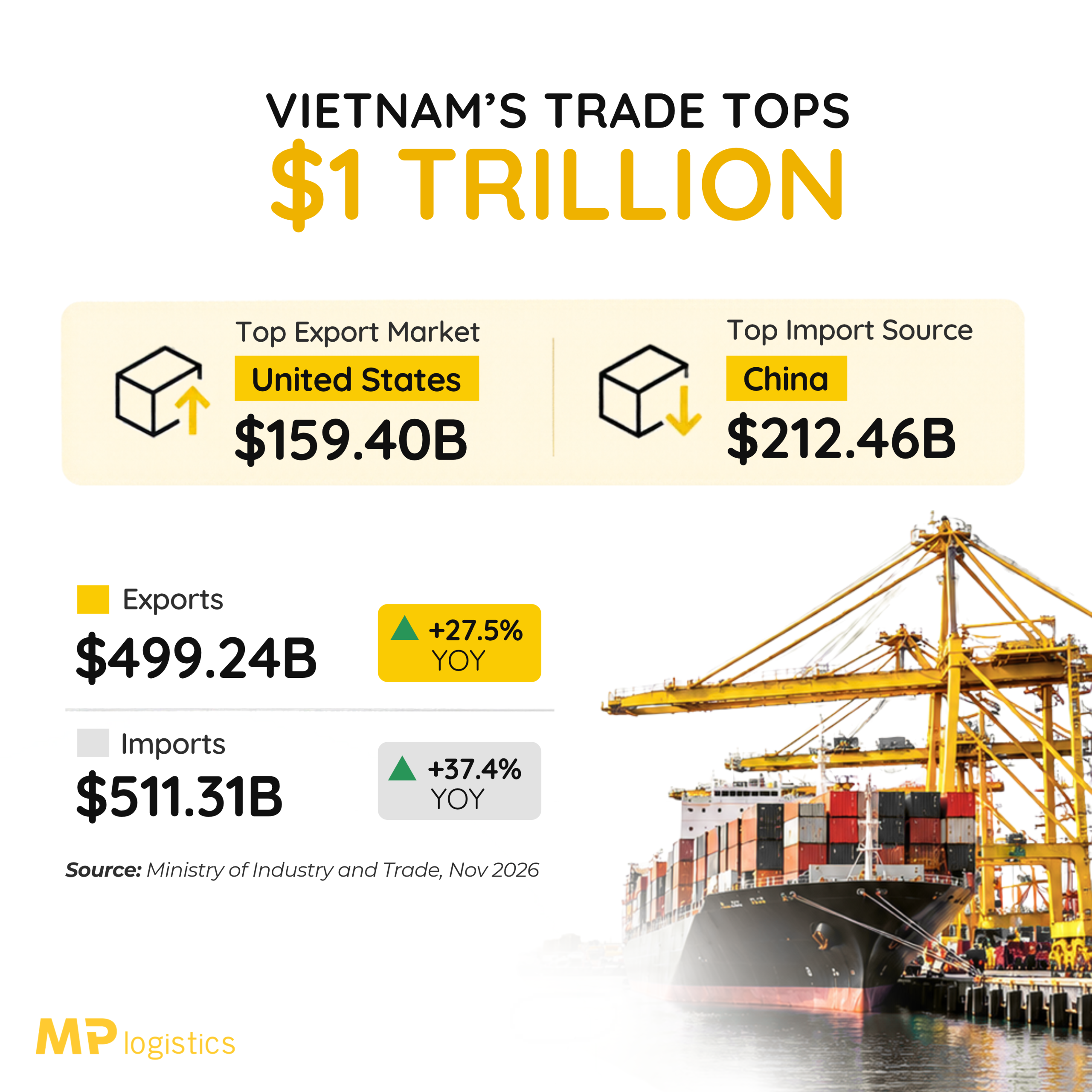
Exports totaled US$499.24 billion, increasing 27.5%, while imports reached US$511.31 billion, up 37.4%. This performance highlights Vietnam’s growing role in international trade and global supply chains, while creating new demands for logistics capacity, supply chain optimization, and international competitiveness.
1. Vietnam’s Import-Export Turnover Surpasses US$1 Trillion
According to the socio-economic report for the first 10 months of 2026, Vietnam’s total merchandise trade reached US$1,010.55 billion, representing a 32.3% increase compared to the same period in 2025. This marks the first time the country’s two-way merchandise trade has exceeded the US$1 trillion threshold.
Key trade figures for the first 10 months of 2026:
- Total import-export turnover: US$1,010.55 billion (+32.3%).
- Exports: US$499.24 billion (+27.5%).
- Imports: US$511.31 billion (+37.4%).
- Trade balance: Trade deficit of US$12.07 billion.
In October 2026 alone, total import-export turnover reached US$122.03 billion, up 47.4% year-on-year. Exports accounted for US$64.67 billion, while imports reached US$57.36 billion.
Surpassing the US$1 trillion mark reflects not only the expanding scale of Vietnam’s trade activities but also its increasingly integrated position in international markets.
2. Strong Export Growth Led by Manufacturing and Processing

During the first 10 months of 2026, Vietnam’s exports reached US$499.24 billion, up 27.5% year-on-year. Manufacturing and processing continued to serve as the primary growth driver, generating US$452.74 billion, equivalent to 90.7% of total export value.
Other major export categories included:
- Agricultural and forestry products: US$33.48 billion (6.7%).
- Seafood: US$10.36 billion (2.1%).
- Fuel and minerals: US$2.66 billion (0.5%).
Notably, 37 export product categories recorded turnover exceeding US$1 billion, accounting for 94.9% of total exports. Among them, eight categories surpassed US$10 billion.
This export structure highlights the continued importance of manufacturing, particularly industries with strong participation in global production and supply networks.
3. Vietnam’s Major International Trading Partners
Vietnam continues to strengthen trade relationships with major economies across the world, supported by expanding export and import activities.
In the first 10 months of 2026, the United States remained Vietnam’s largest export market, with export turnover reaching US$159.40 billion. Meanwhile, China continued to be the country’s largest import market, with imports totaling US$212.46 billion.
Key trade balance figures included:
- United States: Trade surplus of US$140.10 billion, up 26.2%.
- European Union: Trade surplus of US$40.84 billion, up 26.8%.
- Japan: Trade surplus of US$3.42 billion, up 110.4%.
Maintaining strong trade relationships across Asia, North America, and Europe enables Vietnam to diversify export destinations, expand market access, and strengthen its participation in international supply chains.
4. Rising Imports Reflect Manufacturing and Investment Demand
Vietnam’s imports reached US$511.31 billion in the first 10 months of 2026, increasing 37.4% year-on-year, a faster pace than export growth.
Production-related goods accounted for US$481.03 billion, representing 94.1% of total imports. This category includes machinery, equipment, tools, spare parts, and raw materials required for manufacturing and production activities.
The high proportion of production-related imports highlights the close connection between Vietnam’s import activities and its industrial development, particularly in manufacturing and export-oriented industries.
However, imports growing faster than exports resulted in a trade deficit of US$12.07 billion during the period, compared with a trade surplus of US$19.49 billion in the same period of 2025.
This trend underscores the importance of strengthening domestic supporting industries, diversifying sources of raw materials, and increasing local value creation.
5. The US$1 Trillion Milestone Raises New Demands for Vietnam’s Logistics Industry
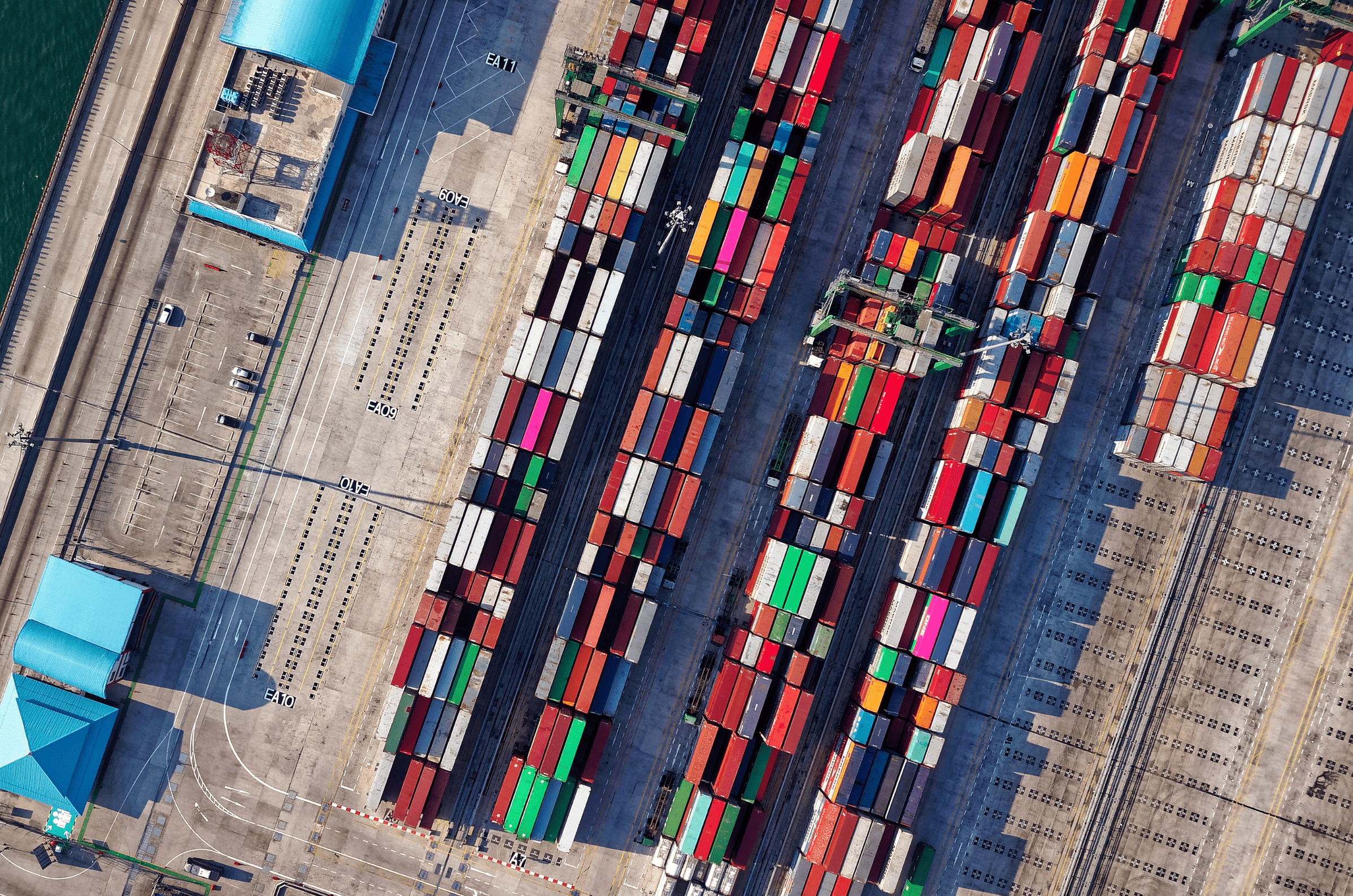
As Vietnam’s import-export turnover surpasses US$1 trillion, demand for transportation, warehousing, distribution, and cross-border cargo handling continues to grow.
Increasing trade volumes place greater pressure on logistics infrastructure and operational efficiency. Businesses must focus on optimizing transportation costs, shortening customs clearance times, improving warehouse management, and strengthening multimodal transport connectivity.
Technology adoption is also becoming increasingly important. Digital documentation, real-time cargo tracking, and integrated supply chain management systems can help businesses improve operational visibility, minimize risks, and respond more effectively to international requirements.
For Vietnam’s logistics industry, this milestone presents both an opportunity to expand service capabilities and a strong incentive to invest in infrastructure, technology, and workforce development.







 VN