 info@mplogistics.vn
 (+84) 28 3811 9033


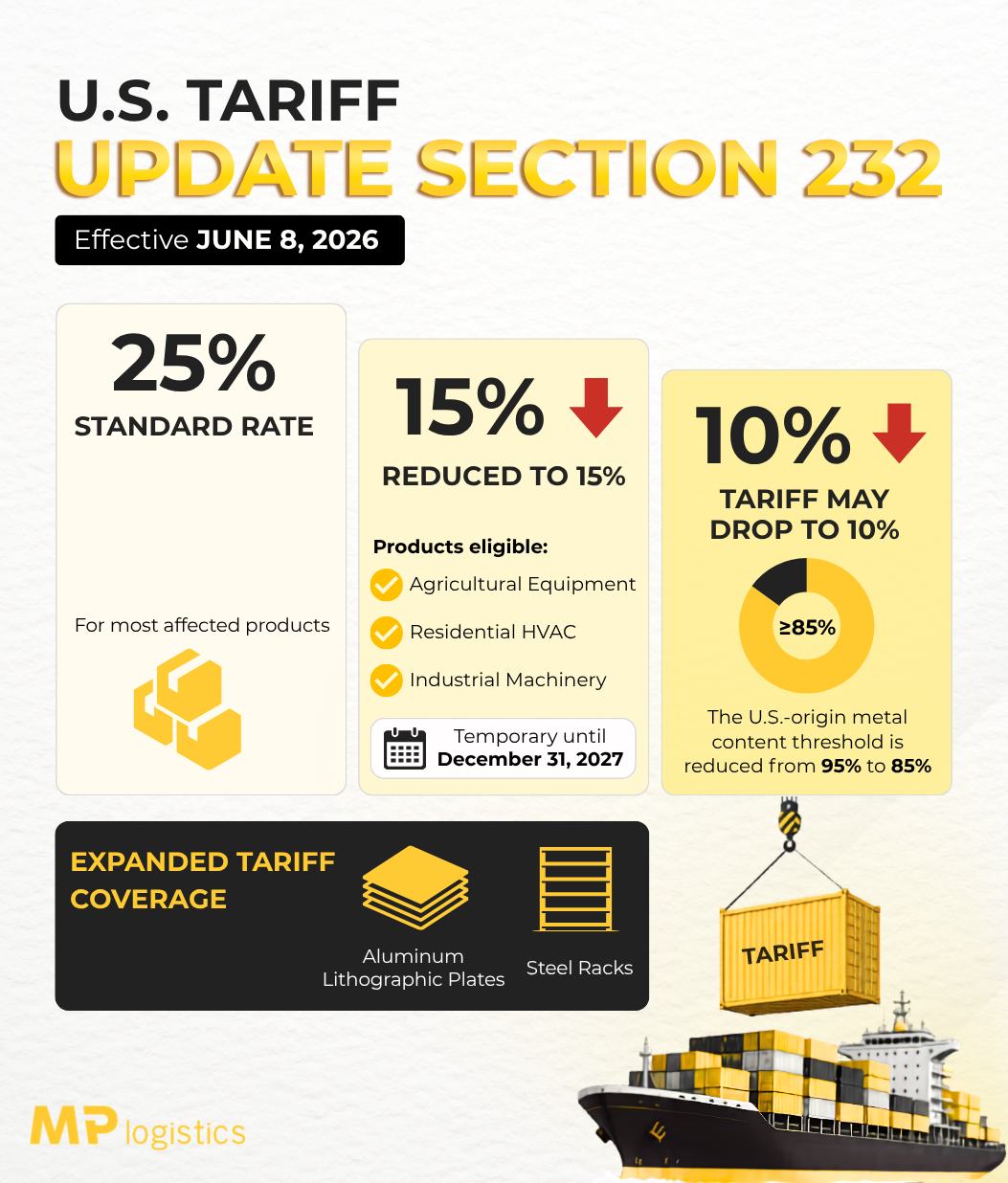
The United States has revised its Section 232 tariffs on steel, aluminum, copper, and certain derivative products, with the new measures taking effect on June 8, 2026. The latest adjustment introduces lower tariff rates for selected product categories, expands coverage to additional goods, and eases origin requirements for products seeking preferential treatment.
The changes are expected to affect import costs, sourcing decisions, and supply chain planning for businesses trading with the U.S. market.
Selected products receive a reduced 15% tariff rate

One of the most notable changes is the reduction of tariff rates from 25% to 15% for selected product categories. Agricultural equipment, residential HVAC products, and certain mobile industrial machinery are among the products eligible for the lower rate.
The reduced tariff treatment is scheduled to remain in effect through December 31, 2027. For exporters and manufacturers, the adjustment may help lower landed costs and improve competitiveness in the U.S. market.
U.S. expands Section 232 coverage to additional products

Alongside tariff reductions, the United States has expanded the scope of products subject to Section 232 measures. Aluminum lithographic plates and steel racks have been added to the list of affected products.
The expansion reflects the U.S. government’s continued efforts to strengthen domestic industries while maintaining oversight of strategic materials and related products entering the country.
New U.S. origin rules create access to a 10% tariff rate
Another key change involves the origin requirements used to determine eligibility for lower tariff rates. The United States has lowered the threshold for qualifying U.S.-origin metal content from 95% to 85%.
As a result, certain derivative products may qualify for an effective tariff rate of 10% if they contain sufficient quantities of steel, aluminum, or copper produced in the United States. The change is expected to encourage greater use of U.S.-origin materials throughout global supply chains.
How the changes may affect global supply chains
For logistics providers, customs brokers, and importers, the changes highlight the growing importance of origin verification and trade compliance in cross-border operations.
The latest U.S. update to Section 232 tariffs introduces both opportunities and challenges for international businesses. While selected products will benefit from lower tariff rates, additional goods have been brought under tariff coverage, and new origin requirements now play a greater role in determining duty levels.

As these changes take effect, businesses involved in global trade should closely monitor their supply chains and compliance procedures to minimize risk and take advantage of available tariff benefits.
Source: Asemconnectvietnam.gov.vn
3/6/2026






 VN
VN