 info@mplogistics.vn
 (+84) 28 3811 9033


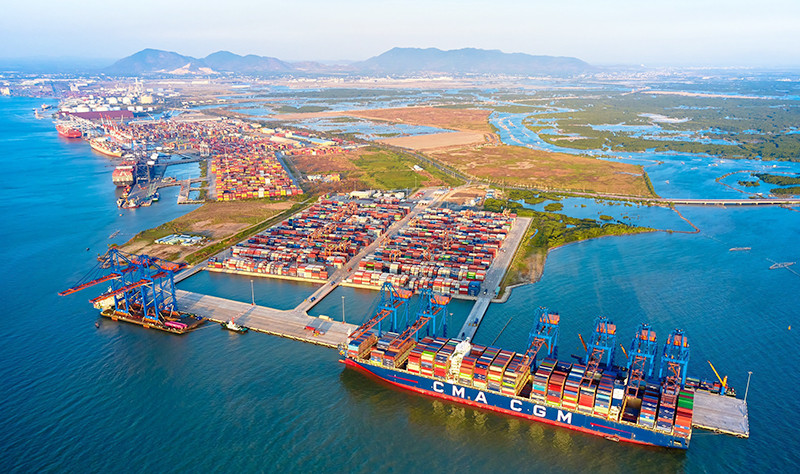
Ho Chi Minh City is moving ahead with plans to develop the Cai Mep Ha Free Trade Zone. The project covers nearly 3,800 hectares and connects closely with the Cai Mep – Thi Vai deep-water port system. As a result, it is expected to become a new growth engine for the city. The zone will strengthen international trade, logistics capacity, and global connectivity.
 Source: VnEconomy
The city announced the initiative at the second conference of the Ho Chi Minh City Party Committee. This move forms part of the implementation of the amended Resolution 98, recently approved by the National Assembly. Alongside the international financial center, the free trade zone marks a new development direction. Although challenging, it carries strong expectations for long-term growth and stable revenue.
Strategic Location Connected to Global Maritime Routes
One of the zone’s strongest advantages lies in its direct access to global maritime routes. The area sits next to Vietnam’s largest deep-water port cluster. Therefore, ships can connect to major international routes without transshipment.
At the same time, the zone links to key transport corridors such as National Highway 51 and the inter-port road system. In addition, it connects closely with national energy infrastructure, including LNG terminals and gas pipelines. These factors create a strong foundation for large-scale industrial and logistics activities. As a result, the area is positioned as a strategic gateway for Vietnam’s global supply chains.
Functional Structure and Development Zones
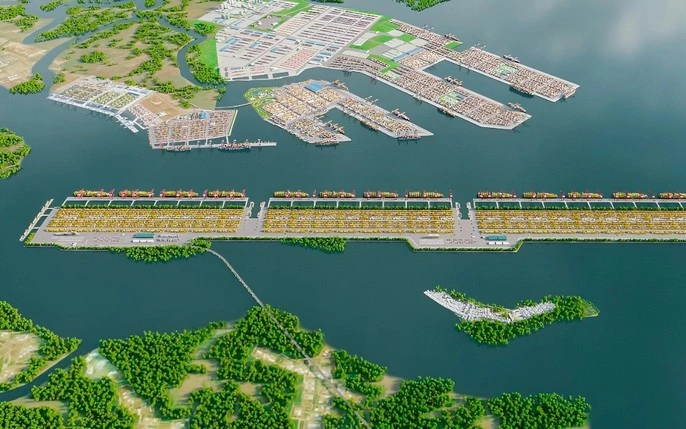
The development plan divides the area into three main functional zones. Together, they integrate transport, logistics, industry, technology, and urban services.
The first zone covers more than 1,735 hectares and serves as a transport and logistics hub. It includes existing seaports, container terminals, inland waterway ports, and the Cai Mep Ha railway station on the Bien Hoa – Vung Tau rail line. Thanks to this multimodal network, cargo handling efficiency will improve, while logistics costs will fall.
The second zone spans over 1,178 hectares and focuses on logistics and industrial activities. It includes the southern section of the Cai Mep Industrial Park and a dedicated logistics center. This area supports storage, distribution, and value-added logistics services closely linked to port operations.
The third zone covers more than 850 hectares and targets high-tech industry, urban development, and services. Notably, planners have reserved green areas and included forest carbon credit planning. This approach helps balance economic growth with environmental protection.
A Magnet for Logistics, High-Tech Industry, and Investment
Source: Thanh Nien Newspaper
Thanks to its location and infrastructure advantages, Cai Mep Ha is expected to attract logistics services, high-tech manufacturing, and large-scale investment flows. The proximity to deep-water ports allows enterprises to optimize export and import operations, while integrated transport infrastructure supports efficient movement of goods across regions.
The free trade zone model offers a favorable business environment by simplifying procedures and reducing trade barriers, helping to strengthen Ho Chi Minh City’s competitiveness in attracting international investors. Cai Mep Ha is therefore positioned not only as a logistics hub, but also as a platform for advanced industrial and service activities connected to global value chains.
Preparation Tasks for a Large-Scale Development
To prepare for the Cai Mep Ha Free Trade Zone, local authorities have identified several priority tasks. These include building public consensus, strengthening land management, ensuring effective site clearance, and preventing unauthorized construction within the planning area.
Human resource development is another key focus, with an emphasis on vocational training in logistics, port operations, mechanical engineering, and trade-related services. At the same time, urban planning will be carried out in a sustainable direction, creating a high-quality living environment capable of attracting experts and managers to work long-term in the area.
Coordination mechanisms between local authorities and city-level departments are also considered essential, particularly in land use planning and infrastructure development. Accelerating inter-regional transport projects and promoting the participation of enterprises in vocational training are seen as important factors for the successful implementation of Cai Mep Ha.
Cai Mep Ha in the Broader Free Trade Zone Network
In the broader context, Cai Mep Ha is part of a wider vision for free trade zones associated with port systems and railway infrastructure. Alongside Cai Mep Ha, other planned free trade zones include Can Gio, An Binh, and Bau Bang, forming a network that supports regional connectivity and economic integration.
With its scale, location, and integrated planning approach, Cai Mep Ha stands out as a key component in this network. Once developed, it is expected to play a critical role in reshaping the logistics landscape of southern Vietnam and reinforcing Ho Chi Minh City’s position as a major trade and investment hub in the region.
Source: Vnexpress
28/12/2025





 VN
VN